
Friendly-play note: Rummy traditions vary by region and table. Agree on house rules before the first deal. RummyPoints is a free scorekeeper and does not handle wagers.
01
What is Pool 201?
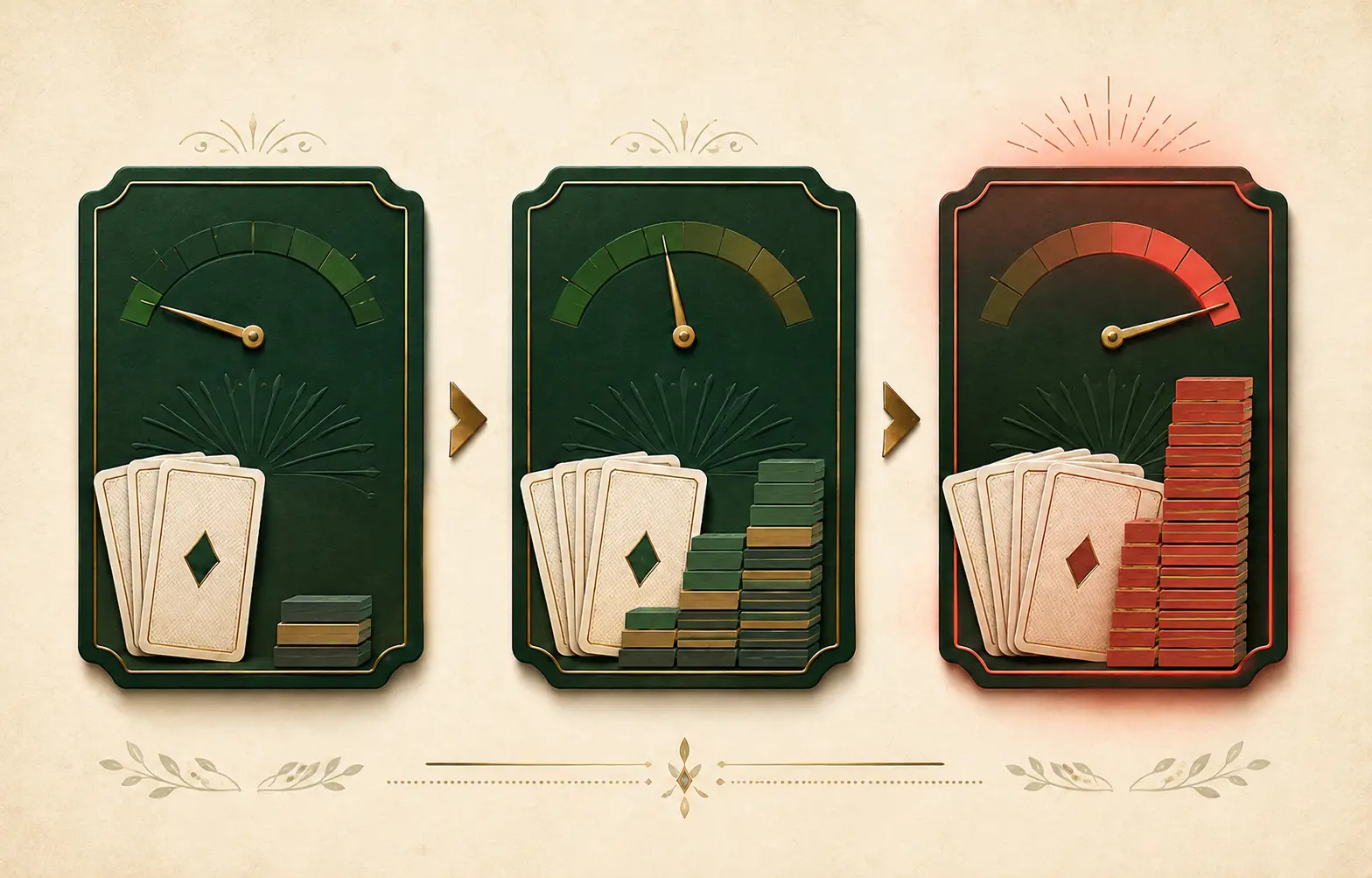
Pool 201 follows the same basic structure as Pool 101 but uses a higher elimination limit. Players add their penalty after every deal and leave the match when their running score reaches or exceeds 201.
The larger pool usually creates a longer game with more opportunities to recover from an expensive hand.
02
Round-by-round scoring
Every deal uses normal 13-card rules. The valid declarer gets zero, while the other players add their verified penalty. RummyPoints keeps the historical entries as well as the current total.
- Save every zero so the round is complete
- Keep eliminated players visible for the final record
- Continue until only one active player remains
- Use the same drop and maximum-penalty values throughout
03
Elimination example
Arjun has 184 points before the deal. He receives 22 points, moving his total to 206. Because 206 is at or above the 201-point limit, he is eliminated from future rounds.
After the score is saved, RummyPoints labels Arjun eliminated and prevents further round entries for him.
04
How Pool 201 differs from Pool 101
The hand rules and card values are the same. Only the elimination threshold changes. Pool 101 is faster and more punishing; Pool 201 gives the group a longer match and reduces the impact of one poor deal.
05
House-rule checklist
Before the first deal, confirm the maximum hand penalty, initial and middle drops, treatment of an invalid declaration, and whether re-entry is permitted. RummyPoints lets the host allow one re-entry per eliminated player.
FAQ
Common questions
Is a player eliminated at 201 or above 201?+
At 201 or above. The threshold includes exactly 201.
Is Pool 201 scored differently from Pool 101?+
No. The deal scoring is the same; only the cumulative elimination threshold is higher.
Why choose Pool 201?+
It works well when the group wants a longer match with more chances to recover after a high-scoring deal.